Horseback Riding as a Sugar Baby: Developing Elegance in the Saddle

Reading time: 9 minutes
Horseback riding as a sugar baby is more than a hobby – it's an investment in your presence and posture. The natural elegance that develops in the saddle carries over into every area of your sugar baby life. Since 2019, the German Equestrian Federation (FN) has recorded a 23 percent rise in adult women beginning to ride, many of them motivated by the wish for a sophisticated, stylish leisure activity.
Equestrian sport combines physical fitness with mental strength and conveys a bearing that pays off on your next date or at business networking. Unlike at the gym, riding builds an organic body tension that boosts your presence without looking forced.
Why Horseback Riding Fits the Sugar Baby Lifestyle Perfectly
Riding shapes your body in a special way. The constant core work in the saddle strengthens your torso muscles and improves your posture for good. At every dinner you automatically sit up straighter and move through rooms more consciously. This natural elegance can't be trained like at the gym – it comes from the constant balance in the saddle.
Equestrian sport also opens up exclusive social circles. Riding stables, especially in dressage and show jumping, are meeting places for people with a similar lifestyle and values. You meet like-minded people who appreciate quality and exclusivity. These contacts can prove just as valuable as a strategically built career network.
You should calculate the financial side realistically. Riding lessons cost an average of $60 to $100 per private lesson, while group lessons run $35 to $60. High-quality riding apparel to get started comes to around $450 to $700. This investment pays off through the overall package of fitness, posture and social environment.
The First Riding Lesson: Getting Off to the Right Start
Your first riding lesson should take place on a school horse that is used to beginners. Reputable riding schools offer trial lessons in which you get to know the horse and the instructor before you commit longer term. Many reputable riding schools near major metro areas, for example, have developed special programs for adult beginners from age 25.
First book five private lessons rather than a ten-lesson package. That way you can test whether the chemistry between you, the horse and the teaching style is right. A good riding instructor explains not only the technique, but also the psychology of the horse – this understanding makes the difference between mechanical riding and a real bond with the animal.
For the first few lessons, comfortable leggings and sneakers with a heel are enough. Only when you're sure that riding will be a long-term hobby do you invest in professional equipment. Most riding stables provide riding helmets for beginners – safety always comes before aesthetics.
What to Expect in the Beginning Phase
The first weeks focus on the correct seat position and balance. You learn to swing from the hip and merge with the horse's movement. This process takes time – expect at least three months until you really feel secure in the saddle.
You're guaranteed to have sore muscles at first, especially in your inner thighs and lower back. These muscle groups are hardly ever worked this intensively in everyday life. After about six to eight weeks of regular training, your body builds up the necessary muscle.
Don't expect to charge through the arena at a gallop right away. Reputable riding instruction begins with walk and trot on the lunge line – a long line on which the horse moves in a circle around the instructor. That way you can concentrate fully on your seat without having to steer at the same time.
Dressage: The Royal Road to Elegance
Dressage is considered the highest discipline of equestrian sport and is ideal for sugar babies who value aesthetics and precision. Dressage is about harmonious communication between rider and horse, expressed through almost invisible aids. This refinement carries over to your entire body language.
Dressage develops an upright but relaxed posture. You learn to hold tension without tensing up – a skill that also pays off when carrying yourself with confidence at fine dining. The straight back, relaxed shoulders and calm, centered gaze become second nature.
For dressage you don't need any special prior experience, but you do need patience. The basic lessons such as correct circles, changes of direction and transitions between gaits form the foundation. Only after about a year of regular training do you begin with more demanding movements such as shoulder-in or travers.
Choosing the Right Dressage Equipment
High-quality dressage apparel is an investment that's worth it. Dressage breeches from Pikeur or Cavallo cost between $200 and $300, but fit perfectly and last for years. Dressage breeches are cut differently from jumping breeches – they're cut higher and have less grip, since you move less in a dressage saddle.
Your dressage boots should be custom-made if you're serious. Companies like Petrie or Konigs offer custom fittings from about $1,000. The boots are made exactly to your calf measurements and guarantee the perfectly elegant look in the saddle. To start, though, ankle boots with half chaps for about $150 to $250 are enough.
At shows, a black or navy show coat is a must, combined with a white blouse and a stock tie. This investment is only worth it once you actually want to compete – for regular training a simple polo shirt or a fleece jacket is enough.
Choosing a Riding School and Instructor Deliberately
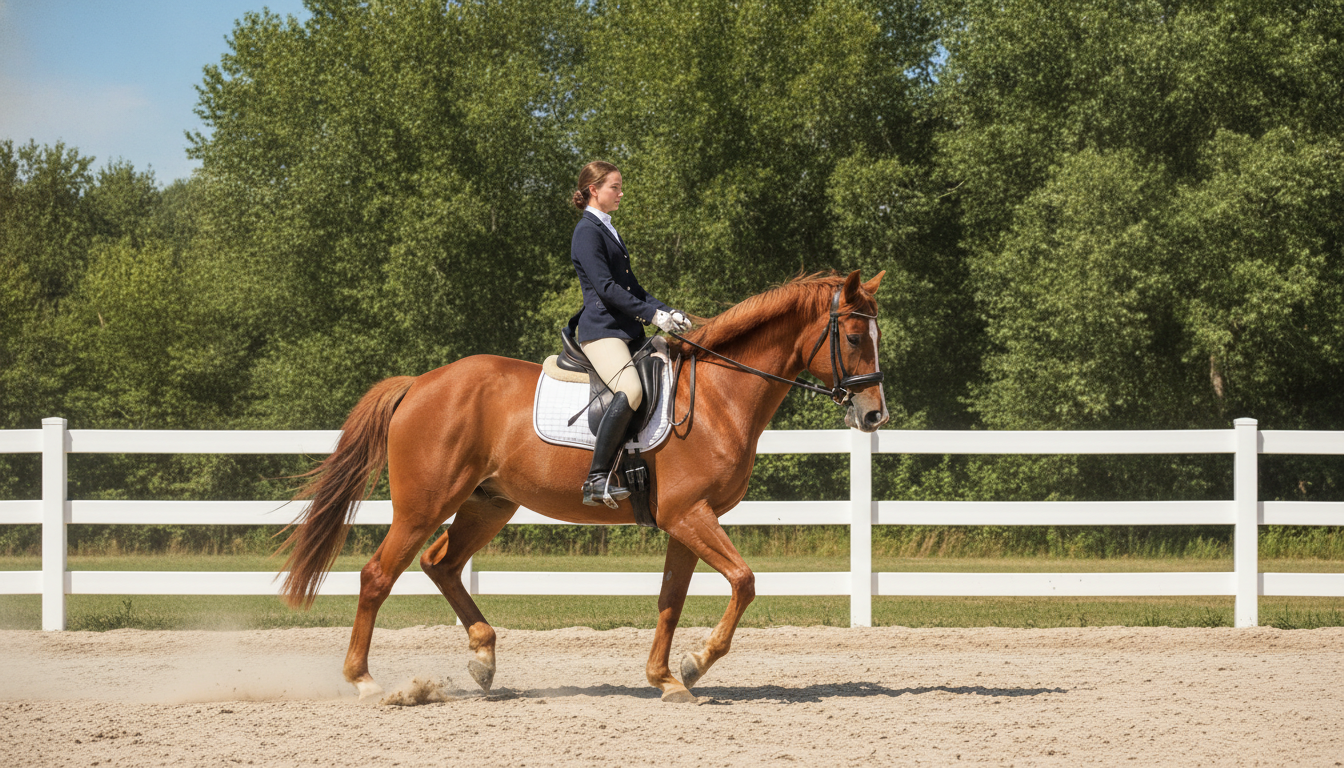
Choosing the right riding school decides how well you learn. Pay attention to the following criteria when making your choice:
- Specialization in adult beginners with their own teaching concept
- Well-trained school horses that react patiently and calmly
- Instructors with a recognized instructor certification (for example through the Certified Horsemanship Association or the US Dressage Federation)
- Clean, well-kept stables with bright riding facilities
- Flexible lesson times, including evenings or weekends for working professionals
- Transparent pricing with no hidden extra costs
Visit at least three different riding stables before you decide. Watch a lesson and pay attention to how the instructor treats beginners. Good trainers explain calmly and precisely without building up pressure. They correct your posture through clear instructions, not through constant criticism.
The atmosphere in the stable should be friendly and supportive. Equestrian sport thrives on community – you'll spend a lot of time at the stable and should feel comfortable there. Elitist or dismissive structures are a warning sign. Similar to setting boundaries in a sugar relationship, you should listen to your gut here too.
Riding Etiquette for Sugar Babies
Equestrian sport has its own manners that you should know. Greet the stable community in a friendly but reserved way. Intense conversations while working with the horse are considered rude – concentration on the animal always comes first. After the lesson you help tidy up, even though you're paying.
Punctuality is absolutely crucial in riding. If you're late for your lesson, the stable's entire daily schedule gets thrown off. Allow at least 20 minutes of lead time to groom and saddle your horse. This preparation is part of the lesson and important for bonding with the horse.
Dress appropriately, but not excessively. Glittery details or flashy jewelry have no place around a horse – they can startle the animal or get caught dangerously. Your elegance shows through high-quality, simple riding clothes in muted colors. Black, navy and gray are the classic tones in riding.
Developing Mental Strength Through Equestrian Sport
Horses mirror your emotions directly. If you're nervous or insecure, it transfers to the animal immediately. This direct feedback trains your emotional self-regulation in a unique way. You learn to stay calm and centered even under pressure – a skill that helps you in every area of life.
Handling a 1,100-pound living creature takes courage and assertiveness combined with gentleness. This balance between leadership and empathy makes you more poised in sugar dating too. You develop a better feel for nonverbal communication and learn to set clear boundaries without coming across as aggressive.
Setbacks are part of riding. Not every lesson goes perfectly, and sometimes nothing seems to work. Developing this frustration tolerance and sticking with it anyway strengthens your mental resilience for the long term. You learn that elegance and skill are the result of continuous work, not of talent alone.
Calculating Costs Realistically

Horseback riding is not a cheap hobby. Besides lessons, there are other costs you should plan for. A realistic calculation for the first twelve months looks like this:
Private lessons once a week cost about $3,900 a year at an average of $75 per lesson. Riding apparel and equipment come to about $700 to $900 for your initial outfit. On top of that there are optional half-leases, in which you pay a monthly fee to ride a particular horse several times a week – these run around $200 to $400 a month.
Many riding stables offer package prices that reduce the single-lesson price. A ten-lesson package costs $650 instead of $750, for example – that's $65 per lesson instead of $75. Offers like that are worth it if you're sure you'll stick with it longer term.
Also consider indirect costs such as getting to the stable, possibly special insurance or regular cleaning of your riding clothes. Professional riding breeches should be washed after every third use – high-quality materials last longer if you treat them with care.
FAQ: Horseback Riding as a Sugar Baby
Am I too old at 25 or older to learn to ride?
No, adult beginners often learn more consciously and faster than children, because they follow instructions better and their body awareness is more mature. Many riding schools have special programs for adult beginners.
How often do I need to ride to see progress?
Once a week is the absolute minimum for continuous improvement. Twice a week is ideal for quick progress without overtaxing your body.
Can I ride seriously without owning a horse?
Absolutely, many successful riders use school horses or half-leases. Owning a horse costs $600 to $1,200 a month and requires daily care – for most sugar babies that makes sense neither time-wise nor financially.
Which discipline is better for beginners: dressage or jumping?
Dressage is usually the better choice for adult beginners, since it carries less risk of injury and teaches the fundamentals more cleanly. You can still learn show jumping later once you have a solid foundation.
How long does it take until I sit elegantly in the saddle?
With regular training you develop a solid basic posture after about six to nine months. True elegance, however, only comes after several years of continuous practice and conscious body work.
Conclusion: Horseback Riding as an Investment in Your Presence
Doing horseback riding as a sugar baby is more than a status hobby. The physical and mental strength you develop in the saddle shapes your entire personality. The natural elegance, upright posture and calm self-assurance that equestrian sport conveys are priceless assets in every area of life.
The financial investment is considerable, but calculable. More important than the cost is the right attitude: riding takes patience, humility and the willingness to keep learning. Anyone willing to go down this path gains not only a fascinating hobby, but an attitude to life that opens doors.
Start with a trial lesson at a reputable riding school near you. Take your time choosing the right stable and instructor. Horseback riding as a sugar baby will transform your presence – both in the saddle and on your next exclusive date.