Fine Dining Etiquette: Shine at a Gourmet Dinner

Reading time: 9 minutes
Your first Michelin-star dinner with your sugar daddy is coming up, and you're wondering which fork to use first? Fine dining etiquette is more than knowing your silverware – it's your key to effortless elegance in upscale company. If you've mastered the rules of conduct at a gourmet dinner, you come across as poised, cultured and are seen as an equal companion.
In this article you'll learn the most important table manners for upscale dining, from the right order of cutlery to the correct way to deal with the sommelier. With these practical tips you'll handle every restaurant visit with ease.
Why Fine Dining Etiquette Is Indispensable in Sugar Dating
In sugar dating we often move in circles where polished manners are a given. A confident presence at a Michelin-starred restaurant signals education and social skills. According to a 2019 study by the Cornell University School of Hotel Administration, 78 percent of guests at upscale restaurants rate their dining partner's table manners as an important factor in the overall impression.
Table manners are not dusty tradition, but practical conventions. They create a pleasant atmosphere and prevent embarrassing moments. If you know the basic rules, you can relax and focus on the conversation instead of nervously wondering what to do with your napkin.
Just as when staying at luxury hotels, fine dining is another chance to show off your worldliness. This confidence is attractive and contributes to a relationship between equals.
Dress Code and First Steps in the Restaurant
Before you even sit down at the table, fine dining etiquette already starts with your wardrobe. Michelin-starred restaurants usually have a dress code ranging from smart casual to business formal. Women are well advised to wear an elegant dress or pantsuit, with understated accessories and jewelry to round off the outfit.
On arrival you hand your coat or jacket to the coat check attendant. A friendly smile and a quick thank-you go without saying. You keep your handbag with you – later it goes on your lap or on the back of your chair at the table, never on the table itself.
The maître d' or waiter leads you to the table. Follow calmly and wait until you're shown your seat. In classic restaurants, ladies are traditionally offered the seat with the better view. Don't sit down until your companion sits as well or you're invited to.
Seating Order and Placement at the Table
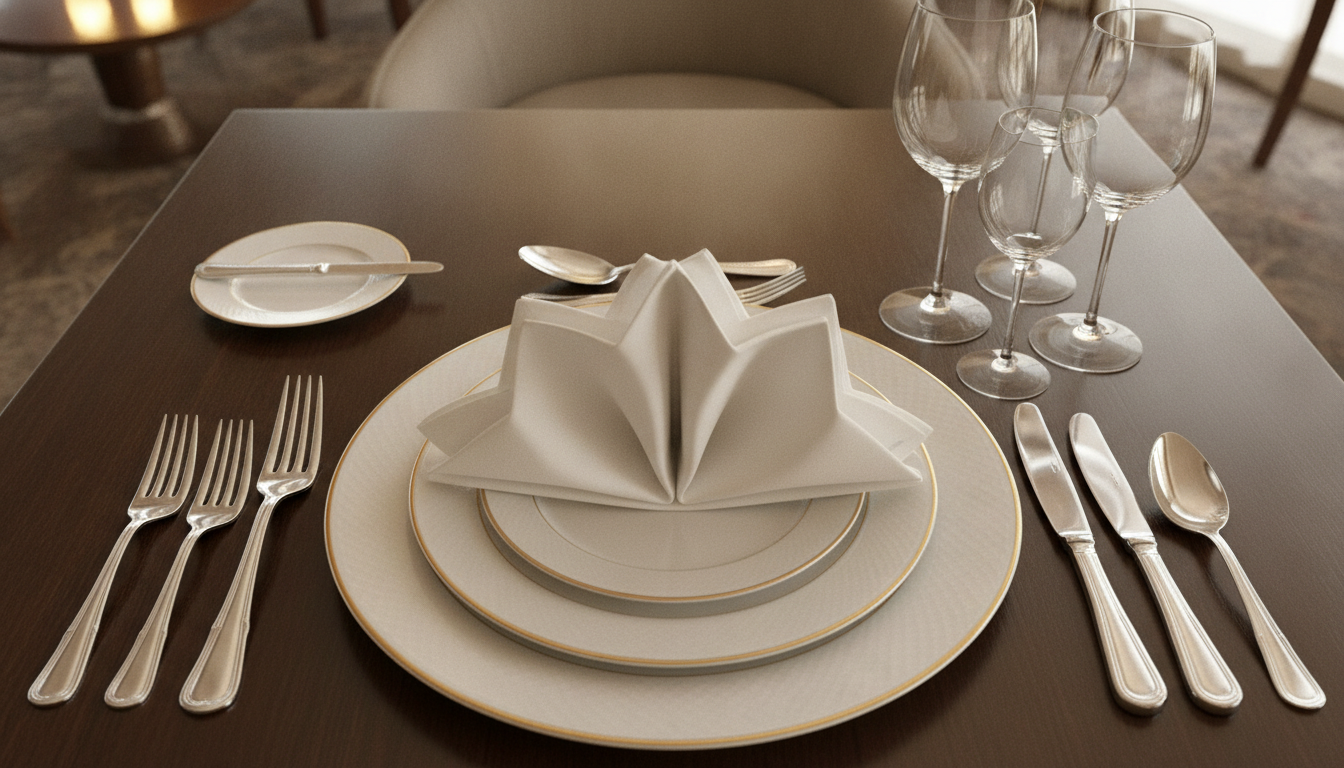
At a properly set fine dining table you'll find several glasses, different pieces of cutlery and often a bread plate and napkin combination. A simple rule helps with orientation: drinks are on the right, bread and butter on the left. Your place setting is everything between these two poles.
You only put the napkin on your lap once everyone at the table is seated. Fold it once in the middle with the fold facing you. It's used only for dabbing your lips, not for wiping your mouth. If you step away briefly, place the napkin loosely on your chair. At the end of the meal you put it to the left of the plate.
Your cell phone stays in your bag for the entire dinner. Silent mode isn't enough – it's not proper to put it on the table. Focus entirely on your companion and the culinary experience.
Understanding Cutlery Order and Correct Use
The order of cutlery at a multi-course menu follows a simple principle: work from the outside in. The outermost cutlery is for the first course, the innermost for the main course. Knives lie on the right with the blade facing the plate, forks on the left with the tines facing up.
Above the plate you'll often find smaller pieces of cutlery for dessert or cheese. Cutlery is always used from the outside in. If you're unsure, discreetly watch other guests or wait until your companion begins.
Key rules for table manners at fine dining:
- Always keep your knife and fork in your hands while eating, even during pauses
- Never put used cutlery back on the tablecloth
- Signal a pause with crossed cutlery on the plate (fork on the left, knife on the right)
- Show you've finished a course with your cutlery laid parallel in the 4 o'clock position
- Never swap cutlery yourself between courses
Communicating with the Waitstaff
Professional waitstaff are your partners for a successful dinner. Always treat waiters and sommeliers politely and with respect. Eye contact and a friendly smile are appropriate, while calling out loudly or snapping your fingers is absolutely taboo.
If you need something, wait for a suitable moment and discreetly raise your hand or make brief eye contact. Good waitstaff pick up on such signals immediately. Take your time with questions about the menu or the wine selection – at fine dining restaurants, guidance is part of the experience.
The sommelier advises you on your wine selection. You don't need to be a wine expert – genuine interest and a willingness to learn something new are appreciated. If you're unsure, simply name your taste preferences (fruity, dry, full-bodied) and your budget. You'll find more on the topic in our guide to wine tasting and etiquette.
Choosing Dishes and Planning the Menu
At a multi-course gourmet dinner you either order à la carte or opt for a tasting menu put together by the head chef. The latter is often the more elegant choice, as it honors the expertise of the house and guarantees courses that are harmoniously matched.
When ordering, tell the waiter your selection clearly and without detours. Special requests are quite possible at upscale restaurants, but should be politely phrased as a question. It's best to communicate allergies or intolerances when you make the reservation.
Portion sizes at fine dining restaurants are deliberately small. That allows for multiple courses without feeling overly full. Eat at a reasonable pace – neither too hastily nor excessively slowly. Take your cue from your companion and the rhythm of the service.
Rules of Conduct During the Meal
Carrying yourself with confidence at a Michelin-starred restaurant also means knowing certain taboos. Never start eating before your host. Wait until everyone at the table has been served, unless your companion explicitly tells you to begin.
Avoid noise while eating. Chew with your mouth closed, don't slurp and avoid loud clattering of cutlery. If you don't like something, leave it discreetly on the plate instead of making negative comments.
Bread is not bitten into, but broken into bite-sized pieces and buttered one at a time. You pass salt and pepper along when asked, without using them first yourself. These small details of fine dining etiquette make the difference between uncertainty and natural elegance.
Making Conversation and Holding Table Talk
At a gourmet dinner, enjoyment takes center stage, but good conversation is just as much part of the experience. Choose topics that fit the atmosphere – culture, travel, current events without politics or controversial subjects. Avoid negative topics like illness or problems during the meal.
While you speak, rest your cutlery on the plate. Gesturing with a knife or fork comes across as rude. Keep the volume appropriate – other guests shouldn't have to overhear your conversation against their will.
Show interest in the dishes being served. Questions about preparation or ingredients are welcome and show appreciation for the culinary craft. The waitstaff are happy to tell you about the origin or special preparation techniques.
Handling Special Dishes and Challenges
Some dishes at fine dining restaurants require special techniques. Oysters are slurped straight from the shell after you've loosened them with the small fork. Artichokes are eaten leaf by leaf, pulling the fleshy end off between your teeth.
With fish you use the special fish cutlery or two forks. Discreetly remove bones with your fork and place them on the edge of the plate. If you accidentally get something inedible in your mouth, discreetly move it onto your fork and place it on the edge of the plate.
If something is unclear, it's perfectly fine to ask the waitstaff for a brief explanation. Professionals recognize immediately when guests need support and help discreetly. Nobody expects you to already know every exotic dish.
Wine Service and Tasting at the Table

When wine is served, a small ceremony follows. The sommelier presents the bottle and states the name and vintage. Your companion nods to confirm. Then a small taste is poured – not as a taste test, but to check whether the wine is corked or flawed.
When tasting, you take the glass by the stem, swirl gently, smell briefly and sip. A simple "Excellent" or an approving nod is enough. Only send the wine back if there is an actual flaw – personal taste preference is not grounds for a complaint.
Your glass is never filled completely, usually to about a third. That leaves room for swirling to release the aromas. Always hold the glass by the stem so you don't affect the wine's temperature. If you don't want a refill, briefly place your hand over the glass.
Paying the Bill and Saying Goodbye
In sugar dating, your companion usually takes care of the check. Still, you should know the etiquette. The check is handed over discreetly at the table, often in a folder. Glance over it briefly, but not ostentatiously.
Tipping at upscale restaurants in the US typically runs 18 to 22 percent. Some fine dining restaurants already include a service charge – check the bill. Additional tip for exceptional service is still appropriate.
When leaving the restaurant, thank the staff warmly. A short comment on the quality of the food is appreciated. Pick up your coat and say a polite goodbye. The last impression counts just as much as the first – table manners don't end at the table.
Avoiding Common Fine Dining Mistakes
Even experienced guests occasionally make mistakes. One of the most common is starting to eat too early. Always wait until everyone has been served or your host invites you to eat. Equally problematic is adding salt before you've tasted – that insults the chef.
Avoid leaning across the table or reaching for things. Instead, politely ask for something to be passed to you. Your elbows don't belong on the table while eating. Between courses you may lightly rest your forearms.
Another faux pas is talking with your mouth full or showing food remnants. Take small bites and chew thoroughly before you speak. If something embarrasses you, stay calm – carrying on with confidence is more stylish than excessive apologies.
FAQ: Fine Dining Etiquette
What is the order of cutlery at a multi-course menu?
Work from the outside in: the outermost cutlery is meant for the first course. For each course you use the next pair of cutlery from the outside, until you reach the innermost one for the main course.
What should I do if I don't recognize something?
Politely ask the waitstaff about preparation or the correct way to eat it. Professional waiters give discreet answers and appreciate genuine interest in the dishes.
Where does the napkin go during the meal?
The napkin stays folded on your lap. When you briefly leave the table, place it on your chair, and at the end of the meal loosely to the left of the plate.
Can I use my smartphone at the table?
No, your cell phone stays in your bag and on silent. Focus entirely on your companion and the culinary experience.
How do I signal that I'm finished?
Place your knife and fork parallel on the plate in about the 4 o'clock position, with the handles pointing to the lower right. This signals to the staff that the course is finished.
Conclusion: Mastering the Gourmet Dinner with Fine Dining Etiquette
Solid fine dining etiquette opens doors in upscale society and makes you a valued companion. The most important table manners can be learned and become more natural with every experience. From the correct order of cutlery to appropriate conversation to respectful treatment of the staff – all these details contribute to a successful gourmet dinner.
Start with the basics and expand your knowledge step by step. Observe attentively, ask questions and gather practical experience. Over time, carrying yourself with confidence at a Michelin-starred restaurant will become second nature. Your next fine dining experience will be a complete success, not only culinarily but socially too.