Master Wine Tasting: Your Guide to Tasting & Etiquette
Reading time: 9 minutes
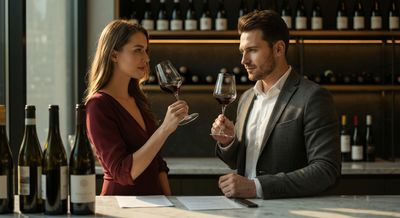
Picture this: your sugar daddy invites you to an exclusive wine tasting at a château in Bordeaux, and while everyone else confidently swirls their glasses and discusses tannins, you feel unsure. It doesn't have to be that way. Wine tasting etiquette isn't rocket science, but a learnable skill that greatly strengthens your standing in upscale circles.
In the world of sugar dating, first-class wines are part of special occasions. According to a 2023 survey by the German Wine Institute (Deutsches Weininstitut), 68% of German wine lovers attend professional tastings at least once a year. As a sugar babe you benefit twice over: you not only enjoy exquisite wines, but also show expertise and cultural awareness.
Understanding the basics of wine tasting etiquette
Professional wine tasting follows a clear sequence that sommeliers apply all over the world. The renowned Master Sommelier Konstantin Baum of the Berlin restaurant Rutz explains in his 2022 book "Wein verstehen" (Understanding Wine) that a correct tasting always includes four phases: look, smell, taste and evaluate.
At your first upscale wine tasting, the most important rule applies: hold the glass by the stem, never by the bowl. This seemingly trivial gesture has a practical reason: the warmth of your hand alters the wine's temperature and leaves fingerprints on the glass that interfere with judging the wine visually.
The sommelier usually handles pouring, but if you pour yourself, fill the glass to one third at most. This allows for the characteristic swirling that releases the aromas. At an exclusive tasting at Château Margaux in 2023, I watched even experienced wine collectors consistently observe this aspect of wine tasting etiquette.
Observing the tasting order
At professional tastings, wines are served in a set order: from light to heavy, from young to old, from dry to sweet. This sequence protects your palate from overload. A powerful Barolo before a delicate Riesling would make your taste buds insensitive to the fine nuances of the white wine.
Conducting a wine tasting like a pro: using the five senses
Visual assessment begins before the first sip. Hold the glass against a white background or a light source and observe the color. A young red wine shows strong violet tones, while mature wines develop brownish shades. These details immediately tell connoisseurs the approximate age and grape variety.
When you swirl, so-called "legs" or "tears" form on the glass wall. The more slowly they run down, the higher the alcohol content or residual sugar. This technique of wine tasting etiquette originally dates back to the 19th century and is still used by sommeliers worldwide today.
Smelling the bouquet properly
The olfactory part of the tasting rules is crucial: we perceive about 80% of the taste experience through the nose. Put your nose deep into the glass and breathe in several times. Professionals distinguish between primary aromas (from the grape), secondary (from fermentation) and tertiary (from aging).
At a tasting at the Robert Weil winery in the Rheingau in 2023, the cellar master demonstrated how to differentiate between fruit, floral and spice notes. A Pinot Gris (Grauburgunder) revealed aromas of pear and honeydew melon, while a mature Pinot Noir (Spätburgunder) showed notes of leather, tobacco and forest floor.
Tasting technique for advanced tasters: the palate as a tool
Take a small sip and let the wine reach all areas of your tongue. The tip of the tongue registers sweetness, the sides acidity, and the back bitterness. Professional tasters practically "chew" the wine to capture all the flavor components.
So-called "slurping" is one of the advanced sommelier tips: draw air through the wine while it is in your mouth. This makes a characteristic sound, but is entirely welcome at professional tastings. This technique additionally oxidizes the wine and intensifies the aromas three- to fourfold.
Spit or swallow: the pro's decision
At extensive tastings with more than six wines, even experienced connoisseurs spit into the spittoons provided. This is not disrespect toward the winemaker, but a professional necessity. Discreetly spitting out the wine after assessing the aftertaste (the "length") is part of correct wine tasting etiquette.
The finish, meaning how long the aromas remain perceptible after swallowing or spitting, is considered a quality marker. A top wine shows a finish of 30 seconds or longer. In its 2023 guidelines, the German Wine Institute defines that in awards judging, length can earn up to 20 points.
Tasting rules for exclusive events
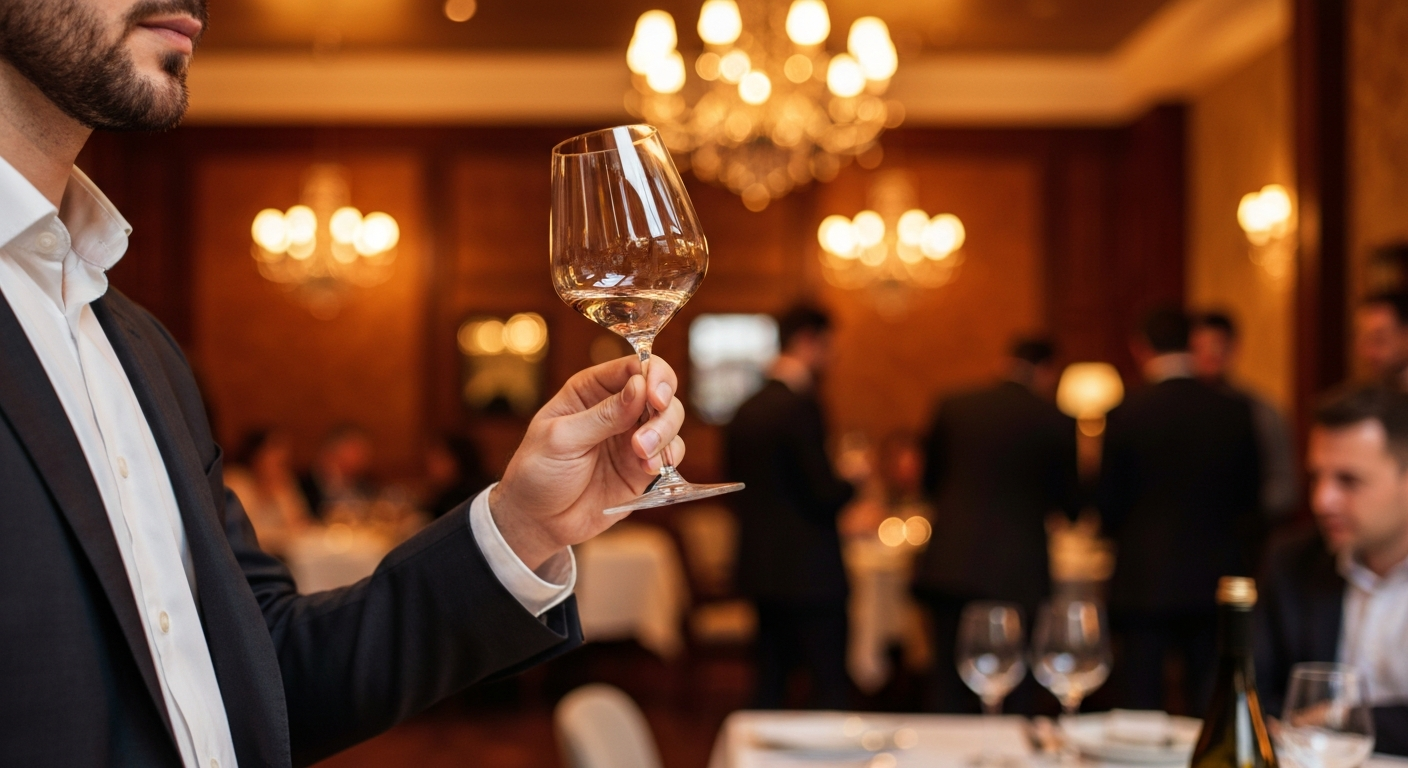
At upscale wine events, additional rules of conduct apply. Don't wear a strong perfume that interferes with other participants' sense of smell. Sommelière Paula Bosch of the Hamburg restaurant Haerlin recommends in her blog avoiding perfumed products for at least two hours before a wine tasting.
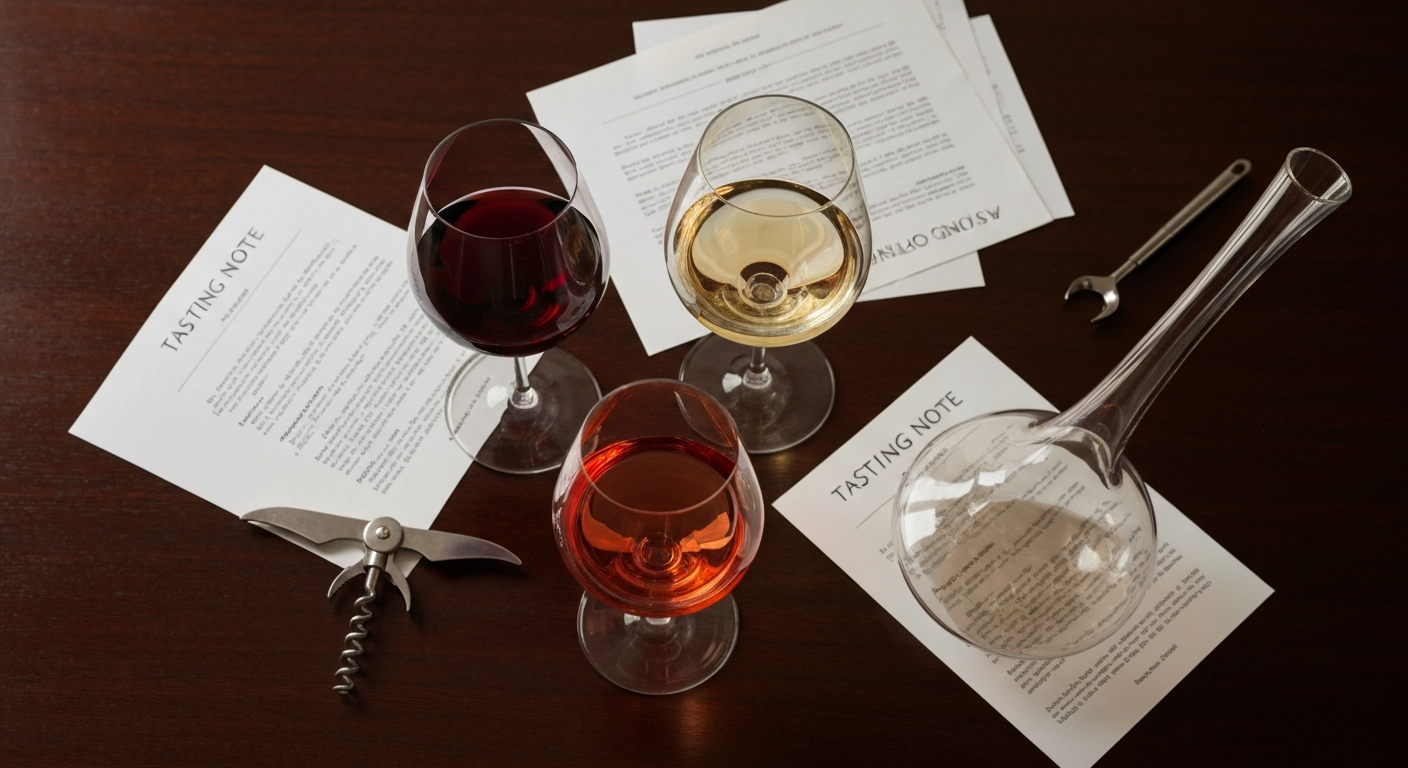
Taking notes is not only allowed but welcome. Many exclusive tastings provide pre-printed tasting sheets. Document color, aromas, taste and your personal impression. These notes help you develop your preferences and talk about wine with confidence on your next gallery date with a cultural touch.
Communicating the right way at a tasting
Avoid excessive wine-speak when you're just starting out. Authentic descriptions are worth more than memorized sommelier phrases. Instead of saying "mineral terroir notes with distinct phenolics," honestly describe: "I taste citrus fruit and a certain freshness."
- Hold back on judgments until all the wines have been tasted - comparative evaluation is often more revealing
- Ask the sommelier or winemaker questions - genuine interest is always appreciated
- Respect different tastes - wine preference is subjective and shaped by culture
- Write down the names of wines you particularly like - it makes later purchases easier
- Thank the host or winemaker personally after the tasting
From beginner to wine connoisseur: your development plan
The path to becoming a wine connoisseur takes patience and practice. Start with structured beginner courses, such as those the Chambers of Industry and Commerce (IHK) offer across Germany. The IHK certificate course "Weinkultur und Weingenuss" (Wine Culture and Wine Enjoyment) costs about €450 and conveys solid basic knowledge in 40 hours of instruction.
Attend wine tastings in your city regularly. Many wine shops and wine merchants offer weekly or monthly tastings. In Munich, for example, the wine merchant Kreis & Meininger holds open tastings every Thursday at 7 p.m. for €25 per person. Events like these offer an ideal practice ground without the pressure of exclusive events.
Building wine knowledge strategically
Focus on one wine region or grape variety at first. If your sugar daddy prefers French wines, specialize in Bordeaux or Burgundy. Systematically tasting eight to ten different wines from the same region trains your palate more effectively than random selection.
According to a 2022 study by Geisenheim University, wine beginners need an average of 30 to 40 structured tastings to reliably distinguish between basic wine styles. That number may seem discouraging, but spread over six months it means only one tasting per week, a realistic goal within an extravagant sugar babe lifestyle.
Exclusive wine events: insider tips for sugar babes
The truly exclusive tastings don't take place in public wine shops. Private tastings at Grand Cru châteaux, vertical tastings of rare vintages or blind tastings in sommelier circles: these are the events that take your wine knowledge to a new level.
The annual "Wine & Gourmet Festival" at Schloss Johannisberg in the Rheingau has attracted international wine connoisseurs since 1995. The three-day event in September costs from €890 and offers masterclasses with renowned sommeliers such as Markus Del Monego, Germany's first Master Sommelier.
At premium events like these, wine tasting etiquette is especially important. Dress elegantly but not over the top - a simple silk blouse with dark trousers is perfect. Avoid jangling jewelry that gets in the way while taking notes. Your outward appearance should reflect your inner expertise, much like the thoughtful wellness rituals of a successful sugar babe.
Networking at wine events
Exclusive wine tastings offer excellent networking opportunities. The participants are mostly wealthy, educated and share a common interest. Use the breaks between tasting flights for authentic conversations - not about the wine alone, but about travel experiences in wine regions or favorite restaurants.
Avoiding common mistakes: what beginners often get wrong
The biggest beginner mistake is excessive shyness. Nobody expects instant expertise from you as a beginner. Even experienced sommeliers keep learning. The wine industry produces about 250 billion bottles worldwide each year - nobody can know all the wines.
Another common mistake: filling the glass too full or topping up before the previous wine has been fully tasted. At professional tastings, each wine is presented and evaluated separately. Mixing different wines in the glass counts as a serious breach of tasting rules.
Also avoid excessive alcohol consumption. A serious tasting is not a party. If you swallow all twelve wines at an event instead of spitting, you lose not only your judgment but also your credibility as an aspiring connoisseur.
Sommelier tips in practice: tasting wine at home
You don't have to wait for exclusive events to improve your skills. Organize private tastings at home or with girlfriends. Buy three or four wines from the same grape variety but different regions - for example Sauvignon Blanc from New Zealand, France and South Africa.
Invest in suitable glasses. The Austrian company Riedel has produced grape-specific glasses since 1756 that really do make a difference. A set of six all-purpose glasses costs about $60 and is entirely sufficient to start with. The right glass shape directs the wine to particular areas of the tongue and so enhances characteristic qualities.
Keep a tasting journal, either the classic handwritten way or digitally with apps like Vivino or Delectable. These apps let you photograph labels, save ratings and get recommendations. According to its own figures, Vivino has over 50 million users worldwide and a database of more than 12 million wines.
Wine tasting etiquette: FAQ for sugar babes
How much should I drink at a professional wine tasting?
At tastings with more than six wines, you should spit out most wines after evaluating them. Professional tasters often swallow only the first and last wine of a series to keep a clear head and sound judgment. This practice isn't impolite, it shows your professionalism.
Can I ask questions as a beginner at exclusive tastings?
Absolutely! Smart questions show genuine interest and are appreciated by sommeliers and winemakers. Just avoid questions whose answers were already given in the presentation. Ask instead for the sommelier's personal recommendations or for food pairings with the wine being tasted.
How do I recognize high-quality wines at a tasting?
High-quality wines are distinguished by complexity, balance and length. They show multilayered aromas that develop during tasting, no dominant component (neither too much acidity, alcohol nor tannins) and a finish of at least 15-20 seconds. With more experience you develop a feel for these quality markers.
What temperature is ideal for wine tastings?
White wines are best tasted at 46-54°F (8-12°C), red wines at 61-64°F (16-18°C). Wines that are too cold close up their aromas, while those that are too warm taste alcoholic and unbalanced. At professional tastings the sommelier takes care of correct temperatures, but for tastings at home a wine thermometer for about $15 is worth buying.
How do I build wine knowledge systematically?
Start with a structured approach: choose a wine region or grape variety and systematically taste different producers and vintages. Attend wine tastings regularly, read reference books like Jancis Robinson's "Wine Grapes" or Hugh Johnson's Pocket Wine Book, and consider a recognized course like WSET Level 1 or 2, which teaches globally standardized wine knowledge.
Conclusion: your path to confident wine connoisseur
Mastering wine tasting etiquette opens doors to exclusive circles and enriches your sugar babe life with a cultivated dimension. From holding the glass correctly to professional tasting techniques to the finer points at premium events, every detail adds to your confident presence.
The path from beginner to connoisseur takes time, practice and genuine interest. With an average of 30-40 structured tastings you build a solid foundation. Make use of local wine tastings, invest in suitable equipment and document your experiences systematically.
Start today: sign up for your first professional wine tasting, invest in a set of quality glasses and invite girlfriends to a private tasting. Your future self at an exclusive château tasting will thank you for this preparation. Put your new wine knowledge to use on your very next upscale date - the combination of expertise and elegance makes you an irresistible companion for discerning sugar daddies.