Champagne Knowledge: Master Types & Serving Like a Pro
Reading time: 11 minutes
When your date opens the champagne list and asks what you prefer, more than just the drink order is decided in that moment. Solid champagne knowledge shows style, sophistication and genuine interest in the finer things in life. Most people can tell champagne from other sparkling wine, but few know the difference between Blanc de Blancs and Blanc de Noirs or why 46°F is the perfect serving temperature.
In the world of upscale dating, champagne is part of the standard repertoire. This knowledge helps you not only to carry yourself with confidence, but also to articulate your own preferences and enjoy the date experience more consciously. The right way to hold a glass, how to toast with style and knowing your types of champagne are skills that set you apart from others.
What Makes Real Champagne
Champagne is legally protected and may only carry that name if it comes from the Champagne region of France. Located about 90 miles northeast of Paris, this wine-growing region has been producing the finest sparkling wine in the world since the 17th century. According to the Comité Champagne, around 300 million bottles are produced every year, and only three grape varieties are permitted: Chardonnay, Pinot Noir and Pinot Meunier.
The traditional Méthode Champenoise sets champagne apart from other sparkling wines. Bottle fermentation lasts at least 15 months, and for vintage champagne at least 36 months. During this time the characteristic fine bubbles and complex aroma profile develop. Prosecco, by contrast, undergoes tank fermentation and ages for only a few months.
On your next date you can explain that the chalk soils of Champagne give the wine its distinctive minerality. The cool temperatures of France's northernmost wine region provide the fresh acidity that makes champagne so refreshing. These geological and climatic particularities cannot be reproduced.
Understanding and Telling Apart the Types of Champagne
The most important distinction is between vintage and non-vintage champagne. A vintage champagne carries a harvest year on the label and is only produced in exceptional years. Dom Pérignon, for example, only releases vintage champagne, and the 2010 vintage wasn't released until 2021.
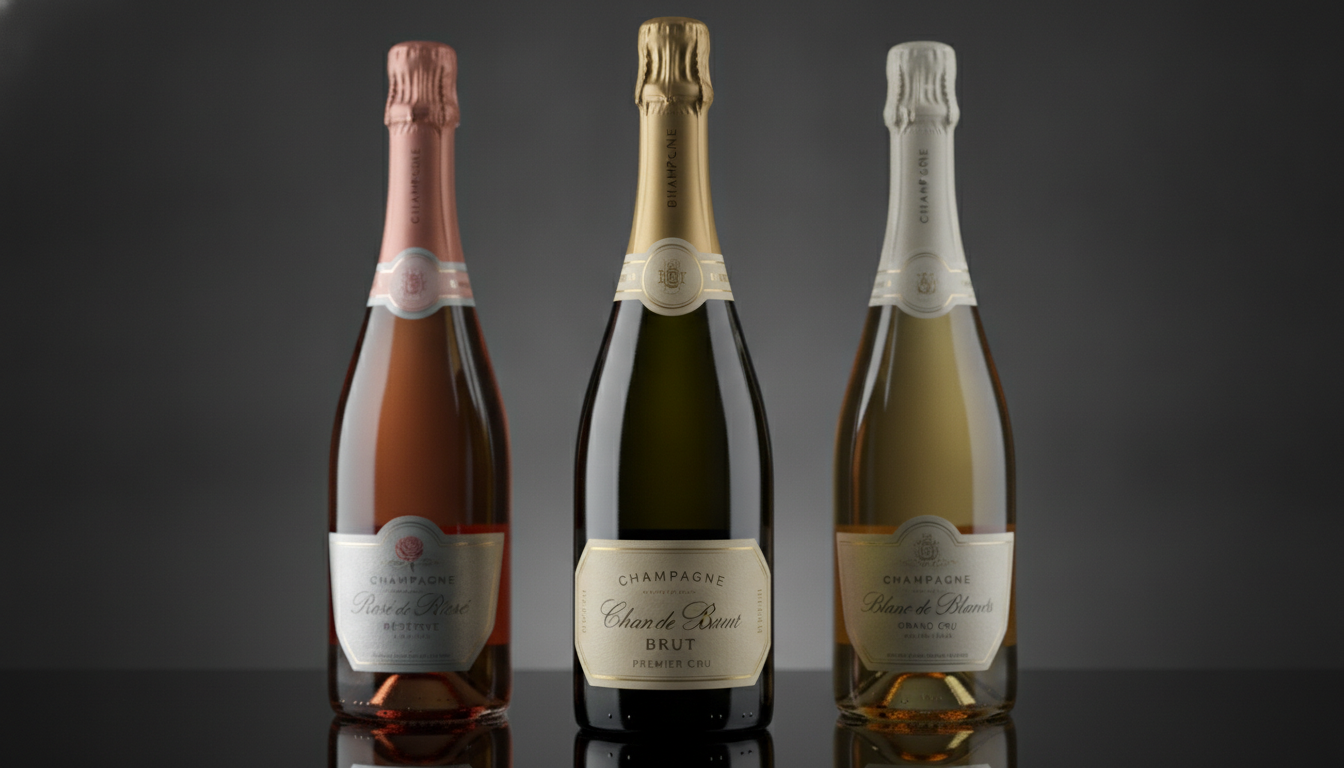
Blanc de Blancs is made from 100 percent Chardonnay grapes and is known for elegance, freshness and citrus aromas. This style is excellent as an aperitif. Blanc de Noirs is made exclusively from red grapes – Pinot Noir or Pinot Meunier – and is fuller-bodied with notes of red fruit.
The dosage determines the level of sweetness. Brut Nature contains less than 3 grams of residual sugar per liter, Extra Brut up to 6 grams, Brut up to 12 grams. Most high-quality champagnes are Brut. Demi-Sec with 32 to 50 grams of residual sugar goes well with desserts, but often feels too sweet for a classic date setting.
The Best-Known Champagne Houses
With 30 million bottles produced per year, Moët & Chandon is the largest champagne house. The Moët Impérial Brut costs around $50 and is a reliable choice. Veuve Clicquot, recognizable by its orange label, was founded in 1772 and turned into a global brand by the widow Clicquot. The Yellow Label Brut is similarly priced.
Bollinger stands for powerful, complex champagnes and was the official supplier to the British royal family. The Special Cuvée ages on the lees for at least three years. Krug is considered the absolute pinnacle, with prices starting at $200 and going up. The Grande Cuvée combines wines from more than ten different vintages.
Smaller grower champagnes, recognizable by the abbreviation RM on the label, often offer better value for money. They make their champagne themselves instead of buying grapes from suppliers. These champagnes show individual character and an expression of terroir.
Getting the Champagne Serving Temperature Just Right
The ideal serving temperature for champagne is between 46 and 50°F. At this temperature the aromas unfold at their best while the bubbles stay fine and elegant. Champagne that is too cold closes up its aromas, while champagne that is too warm tastes flat and boozy.
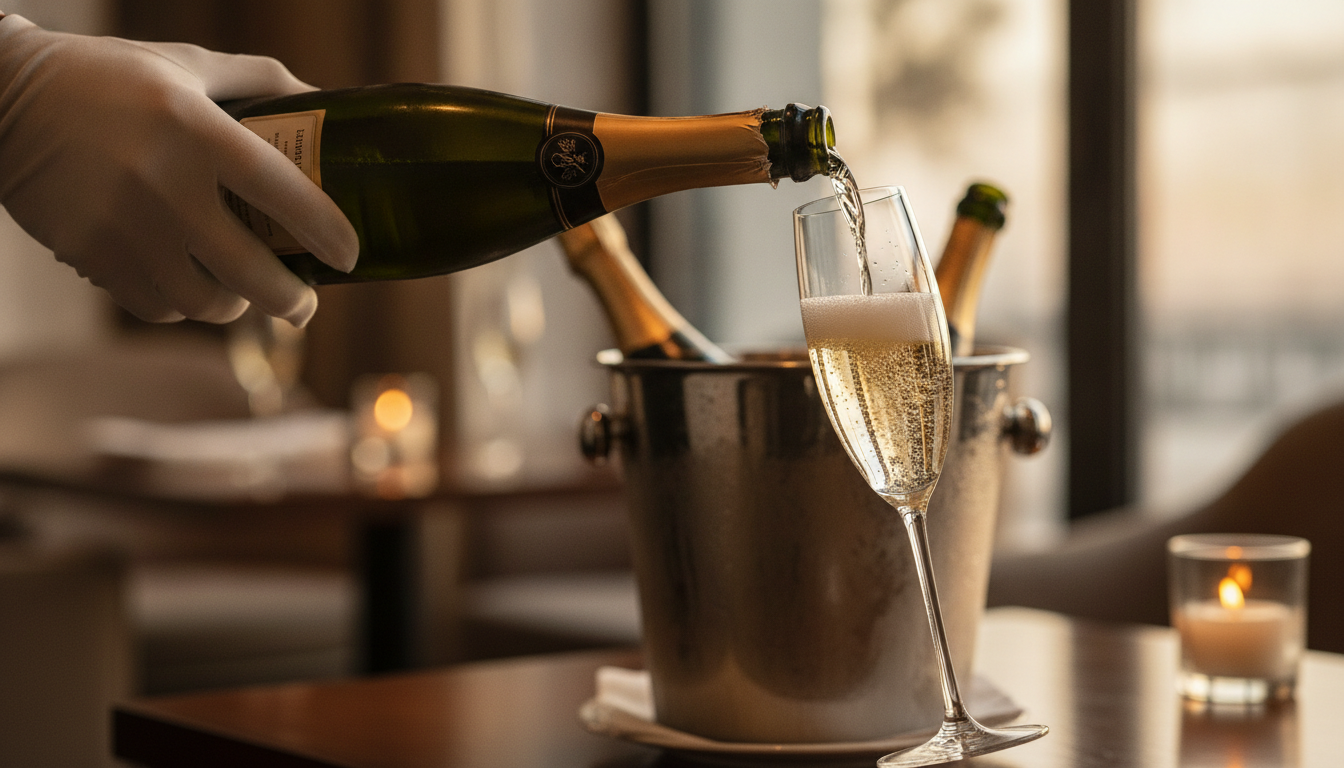
A champagne bucket should be filled two thirds with ice cubes and one third with cold water. This mixture chills the bottle more evenly than ice alone. After about 20 minutes the champagne has reached the right temperature. In the refrigerator a bottle takes around three hours.
Never put champagne in the freezer to chill it quickly. The bottle can burst, and even if it doesn't, the extreme cold damages the delicate aromas. If you need to be quick, wrap the bottle in a wet kitchen towel and put it in the refrigerator for 15 minutes.
The Right Glass Makes the Difference
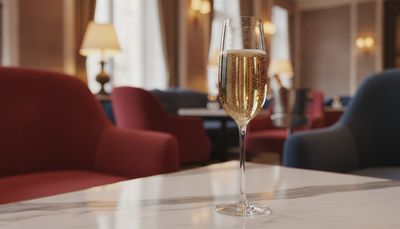
Flutes or tulip glasses are the best choice for champagne. The slender shape lets the bubbles rise for longer and concentrates the aromas toward the nose. Coupes, the flat saucers from the 1920s, may look glamorous, but they let the carbonation escape too quickly.
Always hold the glass by the stem, never by the bowl. Otherwise the warmth of your hand heats the champagne and affects temperature and bubbles. When you toast, the glasses touch only lightly in the upper third, never at the rim. A subtle clink is enough – clinking too hard can damage fine glasses.
Rinse champagne glasses only with clear, hot water and no dish soap. Residue from detergents destroys the bubbles. Polish the glasses with a lint-free cloth and store them upright so no odors settle in the bowl.
Drinking Champagne with Style and Etiquette
Opening the bottle should produce a soft sigh, not a loud bang. First remove the foil and loosen the wire cage. Hold the bottle at a 45-degree angle, secure the cork with one hand and turn the bottle with the other. The pressure in the bottle is about 90 psi – roughly three times that of a car tire.
Pour champagne in two steps. First fill the glass one third full, wait until the foam settles, then fill it to about two thirds. That leaves enough room to smell the aromas. Tilt the glass slightly as you pour, as you would with beer, to avoid excess foaming.
Smell the glass before the first sip. Quality champagne shows aromas of brioche, citrus fruit, white blossoms or almonds. Take small sips and let the champagne roll across your tongue. The fine bubbles should tingle pleasantly, not sting aggressively. Just like with fine dining, connoisseurship shows in the details.
Avoiding Common Mistakes When Enjoying Champagne
Never add ice cubes to champagne. That doesn't just water down the drink, it's considered an absolute faux pas. Fruit or berries in the glass are equally taboo, even if some bars offer this as decoration. Strawberries in champagne are an Instagram trend, but not a sign of expertise.
Champagne is not a drink for gulping. A bottle serves about six glasses and should be enjoyed within one to two hours. Opened champagne loses its bubbles after about three hours. Special champagne stoppers keep the carbonation for another day in the refrigerator.
Never confuse champagne with Prosecco or Cava in conversation. Even though all three are sparkling wines, the quality hierarchy is clear. According to a study by the University of Reims, producing a bottle of champagne costs on average three times as much as a bottle of Prosecco.
Champagne and Food Pairing on a Date
Champagne is more versatile than many think. Blanc de Blancs pairs perfectly with oysters, caviar or seafood. The acidity cuts through the creaminess and the minerality complements the saltiness. If you order oysters on a date, choosing a Blanc de Blancs shows real champagne knowledge.
Rosé champagne, which gets its color from skin maceration or the addition of red wine, goes with heartier dishes. Roast duck, tuna tataki or even a well-aged beef tenderloin can handle the fruitiness and structure of a rosé. Bollinger Rosé or Laurent-Perrier Cuvée Rosé are excellent examples.
With desserts, Demi-Sec works better than dry champagne. The residual sweetness complements tarte tatin or crème brûlée. Moët & Chandon Nectar Impérial was developed specifically for food pairing with spicy Asian dishes. Just as thoughtful as the selection at a wine tasting, the right champagne choice shows your expertise.
Champagne Conversation Topics for Your Date
The history of champagne offers fascinating anecdotes. The monk Dom Pérignon did not invent champagne, as is often claimed, but he perfected the blending of different grapes. He is said to have exclaimed, "Come quickly, I am tasting the stars!" when he tried the first champagne. The story is probably invented, but it works as an icebreaker.
Madame Clicquot revolutionized champagne production with her invention of the riddling table in 1816. This rack made it possible to remove the yeast from the bottle without clouding the champagne. She took over the business at 27 after her husband's death and built it into a global brand.
Winston Churchill was famously a Pol Roger devotee. After his death in 1965, the champagne house created the Cuvée Sir Winston Churchill in his honor. He is said to have drunk half a bottle every day. Details like these show you've engaged with the subject without coming across as arrogant.
Deepening Your Champagne Knowledge for Special Occasions
Large formats follow their own nomenclature. A magnum holds 1.5 liters and is considered the ideal size for aging, since the ratio of wine to oxygen is optimal. A Jeroboam holds 3 liters, a Methuselah 6 liters. The largest standard bottle, the Melchizedek, holds 30 liters and is produced by only a few houses.
Sabrage, opening the bottle with a saber, is a Napoleonic tradition. The saber glides along the bottle up to the neck, where two seams meet. At this predetermined breaking point the top breaks off cleanly. You're better off leaving this technique to professionals, but it makes an impressive conversation topic.
Prestige cuvées represent the best a house has to offer. Dom Pérignon from Moët & Chandon, Cristal from Louis Roederer or La Grande Dame from Veuve Clicquot cost between $150 and $300 per bottle. These champagnes are only produced in exceptional years and age significantly longer. Knowing about these top bottlings shows real expertise.
Practical Tips for Champagne Situations
When your date asks you about your favorite, name a specific brand and give a reason. "I appreciate Bollinger Special Cuvée for its powerful structure and brioche notes" sounds far more knowledgeable than "I actually like all champagnes." Articulating personal preferences shows taste and confidence.
In upscale restaurants the sommelier usually does the pouring. Lean back slightly and let the staff do their job. If you pour yourself, always serve your companion first, then yourself. Top up your date's glass before it's empty, but not constantly – that comes across as pushy.
If the champagne served tastes of cork or smells oxidized, it's perfectly legitimate to politely mention it. Say to the sommelier: "I think this bottle might be corked – could you please taste it?" According to the Institut National de l'Origine et de la Qualité, about 3 to 5 percent of all champagne bottles are affected.
Choosing Meaningful Champagne Gifts
A well-chosen champagne as a gift shows appreciation. For special occasions, a vintage champagne from the year of someone's birth or a meaningful year is a good fit. Many retailers offer this service, with older vintages starting at around $100.
Personalized labels look thoughtful, but should be avoided with prestige brands. A Moët Impérial with a custom label suits casual celebrations, while a Dom Pérignon should keep its original label. Packaging matters – a high-quality wooden box or gift box underlines the value.
Combine the champagne with matching companions. A set of champagne, handmade chocolates and a beautiful glass shows you've put thought into it. Just like when choosing accessories, it's all about harmonious details.
Frequently Asked Questions About Champagne Knowledge
How long does champagne keep after opening?
Opened champagne keeps its quality for about 24 hours in the refrigerator with a special champagne stopper. Without a stopper, it loses most of its bubbles after just three hours.
What is the difference between champagne and Prosecco?
Champagne undergoes at least 15 months of bottle fermentation in the Champagne region, while Prosecco undergoes a shorter tank fermentation in Italy. This results in finer bubbles and more complex aromas in champagne.
Which types of champagne are best for a date?
Blanc de Blancs as an aperitif shows elegance, Brut as an all-rounder suits most situations, and rosé champagne with the meal comes across as thoughtful. Avoid overly sweet styles like Demi-Sec on a first date.
Why is the serving temperature so important for champagne?
At 46 to 50°F the aromas unfold at their best and the bubbles stay fine. Champagne that is too warm tastes flat and boozy, while champagne that is too cold completely shuts down aroma development.
Can you store champagne for a long time?
Non-vintage champagne should be drunk within two years of purchase, while vintage champagne keeps developing for 10 to 20 years. Store bottles on their side at a constant 50 to 54°F, away from light.
Conclusion: Champagne Knowledge as an Expression of Style
Solid champagne knowledge sets you apart in the world of upscale dating. Knowing the different types of champagne, the correct serving temperature and how to handle a toast with style are more than mere etiquette. They show that you appreciate the fine nuances of a luxury lifestyle and can enjoy them consciously.
From telling Blanc de Blancs from Blanc de Noirs, to the optimal temperature of 46 to 50°F, to the right way to hold a glass – every detail contributes to a successful appearance. This knowledge allows you to state your preferences with confidence and have conversations about more than just the price. The investment in this expertise pays off in the form of poise and authentic enjoyment.
Use your champagne knowledge purposefully, without sounding preachy. True expertise shows in the ease with which you choose a bottle or describe the nuances of different cuvées. Combine this know-how with your personal touch, and you'll impress in any champagne situation. Which champagne will you try on your next date?